

Online Grocery Market to Reach USD 2.78 Trillion by 2035 as Digital Shopping and Fast Delivery Transform Retail
Online Grocery Market
Online Grocery Market is transforming retail with digital shopping, faster delivery, and growing consumer demand for convenience and accessibility.
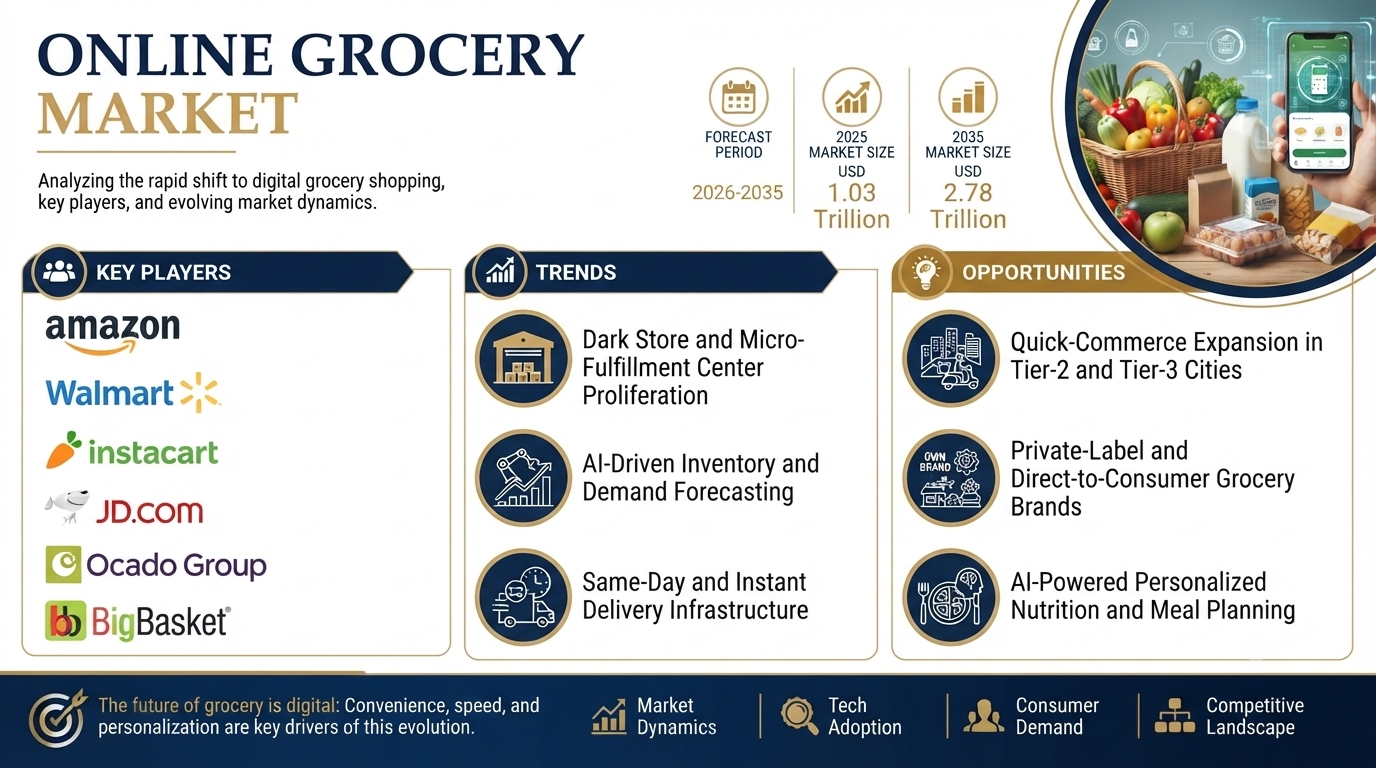
NEW YORK, NY, UNITED STATES, July 14, 2026 /EINPresswire.com/ -- The global Online Grocery Market Scope is undergoing significant transformation as consumers increasingly shift toward digital platforms for their daily food and household purchases. Changing lifestyles, rising internet penetration, growing smartphone usage, and improvements in digital payment systems have accelerated the adoption of online grocery shopping across different regions. Consumers are now looking for convenient purchasing experiences that reduce time spent on traditional shopping while offering access to a wide range of products from the comfort of their homes.According to Market Research Future analysis, the Online Grocery Market was valued at USD 1.03 Trillion in 2025 and is projected to expand significantly to USD 2.78 Trillion by 2035. The market is expected to register a CAGR of 11.15% during the forecast period from 2026 to 2035. The growth of online grocery services is supported by increasing demand for convenience, evolving consumer preferences, advanced logistics networks, and continuous innovation in digital commerce solutions.
Online grocery platforms have become an important part of modern retail ecosystems by connecting consumers with supermarkets, grocery chains, local sellers, and food brands through digital channels. These platforms provide multiple advantages, including doorstep delivery, flexible ordering options, product variety, personalized recommendations, and subscription-based purchasing models.
Changing Consumer Behavior Supporting Online Grocery Expansion:
Consumer shopping habits have changed considerably over recent years, with digital platforms becoming a preferred option for purchasing essential products. Busy work schedules, urban lifestyles, and increasing expectations for faster services have encouraged consumers to adopt online grocery applications and websites.
Unlike traditional grocery shopping, online platforms allow customers to compare products, check availability, explore offers, and complete purchases without visiting physical stores. This convenience has encouraged repeat purchases and strengthened customer engagement with digital grocery providers.
The growth of online grocery shopping is also linked to increasing demand for personalized experiences. Many platforms use customer preferences, previous purchase patterns, and search behavior to provide customized recommendations. These features improve shopping efficiency and help consumers discover products that match their requirements.
Another important factor influencing consumer adoption is the expansion of digital payment methods. Secure payment gateways, mobile wallets, and simplified checkout processes have reduced barriers for online grocery purchases.
Growing Role of Instant Delivery Services:
Instant delivery has emerged as one of the most influential trends shaping the Online Grocery Market. Consumers increasingly expect faster delivery options for essential grocery items, encouraging companies to develop advanced fulfillment networks capable of handling urgent orders.
Instant grocery delivery services focus on reducing delivery time through strategically located fulfillment centers, improved inventory management, and optimized delivery systems. These solutions are particularly gaining popularity in urban areas where consumers require quick access to everyday necessities.
The growth of instant delivery is also supported by changing expectations among younger consumers. Digital-first shoppers often prioritize speed, convenience, and flexibility when selecting grocery services. As a result, online grocery providers are investing in technologies and operational improvements to enhance delivery efficiency.
Expansion of Packaged Foods:
The packaged foods segment is experiencing strong growth within the Online Grocery Market due to increasing consumer demand for convenient and easily accessible food products. Packaged foods offer longer shelf life, simple storage requirements, and availability across multiple digital platforms, making them suitable for online grocery purchasing.
Consumers are increasingly purchasing snacks, breakfast products, beverages, frozen foods, ready-to-cook items, and other packaged products through online channels. The availability of detailed product information, customer reviews, and comparison features encourages consumers to make informed purchasing decisions.
The rise of smaller households, changing meal patterns, and demand for convenient food solutions are also contributing to the expansion of packaged food purchases. Online grocery platforms provide customers with broader product selections compared with many traditional stores, allowing brands to reach a wider consumer base.
Download Free Sample PDF Copy : – Access A Complimentary Copy of Our Report to Explore Its Content and Insights
https://www.marketresearchfuture.com/sample_request/9626
Key Factors Driving Market Growth:
Several factors are contributing to the continued expansion of the global Online Grocery Market. One of the primary growth drivers is the increasing penetration of smartphones and internet connectivity. Consumers across developed and emerging economies are gaining easier access to digital shopping platforms, creating new opportunities for online grocery providers.
Urbanization is another major factor supporting market development. Growing urban populations often experience limited time availability, increasing the demand for convenient shopping alternatives. Online grocery services address this requirement by providing flexible ordering and home delivery solutions.
The improvement of logistics infrastructure is also playing an important role in market expansion. Efficient supply chains, advanced warehousing facilities, and improved transportation networks enable companies to provide reliable delivery services while managing large volumes of orders.
Additionally, increasing awareness of digital commerce benefits is encouraging more consumers to explore online grocery platforms. Features such as recurring orders, digital coupons, product recommendations, and easy returns contribute to improved customer experiences and stronger adoption rates.
Technological Innovations Transforming Online Grocery Platforms:
Technology continues to reshape the online grocery industry by improving operational efficiency and customer engagement. Companies are increasingly adopting artificial intelligence, machine learning, automation, and data analytics to enhance different aspects of grocery retail.
Artificial intelligence helps platforms understand consumer preferences and provide personalized shopping suggestions. Predictive analytics enables companies to forecast demand patterns, optimize inventory levels, and reduce product shortages.
Automation is also becoming important in warehouse and fulfillment operations. Automated sorting systems and smart inventory management solutions help companies process orders more efficiently while improving accuracy.
Mobile applications remain a key technology component in online grocery growth. User-friendly applications with convenient navigation, personalized recommendations, and secure payment options encourage customers to make frequent purchases through digital channels.
Online Grocery Market Segmentation:
▪️By Product Category:
The Online Grocery Market is segmented into fresh and perishable goods, packaged foods, pantry staples, and beverages. Fresh products lead due to improved cold-chain systems and rising consumer trust, while packaged foods are growing with subscription services and private-label offerings. Pantry essentials benefit from regular household demand, and beverages gain traction through changing consumer preferences.
▪️By Delivery Model:
The market includes same-day delivery, instant delivery, scheduled delivery, and pickup models. Same-day delivery remains popular due to convenience, while instant delivery is expanding rapidly with quick-commerce platforms and urban demand. Scheduled delivery continues to serve customers seeking affordability and planned shopping.
▪️By Platform Type:
Online grocery platforms are divided into aggregators, retailer-owned apps, and other digital channels. Aggregators attract users through variety and price comparison, while retailer-owned platforms are growing through loyalty programs, personalization, and direct customer engagement.
Market Opportunities for Industry Participants:
The Online Grocery Market offers significant opportunities for retailers, technology providers, and food companies. Expansion into emerging economies represents a major growth opportunity as internet access and digital payment adoption continue to improve.
Companies can strengthen their market position by developing localized services that address regional consumer preferences. Offering multiple language options, region-specific product selections, and flexible payment methods can help platforms attract diverse customer groups.
Partnerships between grocery retailers, delivery companies, and technology providers are also creating new opportunities. Collaborative business models can improve supply chain efficiency, expand product availability, and enhance customer service capabilities.
Subscription-based grocery models represent another opportunity area. Regular delivery programs for frequently purchased items can improve customer retention while providing consumers with greater convenience.
Regional Analysis of Online Grocery Market:
The global Online Grocery Market is growing across regions due to increasing digital adoption, improved logistics, and changing consumer shopping preferences. North America leads with strong e-commerce infrastructure, advanced delivery networks, and high acceptance of online grocery platforms. Europe is experiencing steady growth driven by digital transformation, sustainable shopping preferences, and efficient retail systems.
Asia-Pacific is emerging as a high-growth region due to rapid urbanization, smartphone penetration, and expanding digital payment adoption. Growing investments in delivery services and technology solutions are supporting market expansion. Meanwhile, the Middle East, Africa, and Latin America are gradually adopting online grocery services as internet access improves and consumers increasingly seek convenient, time-saving shopping options.
Challenges Impacting Online Grocery Market Development
The Online Grocery Market is expanding rapidly, but several challenges affect industry growth and operational efficiency. One major challenge is managing logistics and delivery operations, as grocery products require careful handling, storage, and timely delivery to maintain freshness and quality.
Maintaining product quality is another key concern, especially for perishable items such as fruits, vegetables, and dairy products. Companies need effective quality control systems, improved packaging, and efficient supply chains to build customer trust.
Increasing competition among digital grocery platforms also creates pressure to enhance pricing, delivery services, and customer experiences. Additionally, managing operational costs related to technology, warehouses, and delivery networks remains a challenge. Companies are focusing on automation and advanced solutions to improve efficiency and support long-term growth.
Competitive Landscape of Online Grocery Market:
The Online Grocery Market includes several established companies and emerging digital platforms competing to expand their customer base and improve service capabilities. Market participants are focusing on technological innovation, delivery improvements, strategic partnerships, and customer-focused solutions.
According to the market analysis, key companies profiled in the Online Grocery Market include:
▪️Amazon
▪️Walmart
▪️Instacart
▪️JD.com
▪️Ocado
▪️BigBasket
▪️Meituan
▪️Coupang
▪️Carrefour
▪️Gopuff
These companies are adopting various strategies to strengthen their market presence. Expansion of delivery networks, development of digital platforms, improvements in supply chain management, and integration of advanced technologies are among the major approaches being followed.
Large retailers are combining physical store networks with online capabilities to create integrated shopping experiences. This approach allows businesses to provide customers with multiple purchasing options while improving operational efficiency.
Technology-focused companies are also contributing to industry development by introducing innovative delivery models and digital shopping experiences. The increasing adoption of artificial intelligence, automation, and data analytics is expected to influence competitive strategies in the coming years.
Future Outlook of Online Grocery Market:
The future of the Online Grocery Market is expected to be influenced by digital innovation, changing consumer habits, and advanced delivery solutions. Growing demand for convenience is encouraging grocery platforms to enhance fulfillment networks, smart warehouses, and faster delivery services. Personalization through data analytics and AI-driven recommendations will help improve customer experiences and increase engagement. Sustainability will also become a key focus, with companies adopting eco-friendly packaging and efficient delivery practices. Expanding internet access and rising digital adoption in emerging regions are expected to create new opportunities for online grocery services. As technology continues to reshape retail, the industry is likely to experience continued evolution, driven by convenience, accessibility, and customer-focused solutions.
Frequently Asked Questions?
1. What is the projected size of the Online Grocery Market by 2035?
The Online Grocery Market is projected to reach USD 2.78 Trillion by 2035, expanding from USD 1.03 Trillion in 2025 due to increasing digital shopping adoption and changing consumer preferences.
2. What is driving the growth of the Online Grocery Market?
Major factors driving market growth include rising smartphone usage, expanding internet connectivity, increasing demand for convenience, improved digital payment systems, and advancements in delivery infrastructure.
3. Which segment is expected to grow fastest in the Online Grocery Market?
The instant delivery segment is identified as the fastest-growing segment based on delivery model, while packaged foods represent the fastest-growing segment based on product category.
4. Who are the major companies operating in the Online Grocery Market?
Key companies profiled in the market include Amazon, Walmart, Instacart, JD.com, Ocado, BigBasket, Meituan, Coupang, Carrefour, and Gopuff. These companies focus on improving digital grocery experiences, delivery services, and supply chain capabilities.
Read Our Related Research Report:
Gift Cards Market:
https://www.marketresearchfuture.com/reports/gift-cards-market-12013
High-Fashion Market:
https://www.marketresearchfuture.com/reports/high-fashion-market-14014
COVID 19 Impact Online Grocery Market:
https://www.marketresearchfuture.com/reports/covid-19-impact-online-grocery-market-9546
Bags Market:
https://www.marketresearchfuture.com/reports/bags-market-10573
Electric Toothbrush Market:
https://www.marketresearchfuture.com/reports/electric-toothbrush-market-7983
Sagar Kadam
Market Research Future
+1 628-258-0071
email us here
Legal Disclaimer:
EIN Presswire provides this news content "as is" without warranty of any kind. We do not accept any responsibility or liability for the accuracy, content, images, videos, licenses, completeness, legality, or reliability of the information contained in this article. If you have any complaints or copyright issues related to this article, kindly contact the author above.
